Peter Malinauskuas: Focus on the Future
Andre Castellucci
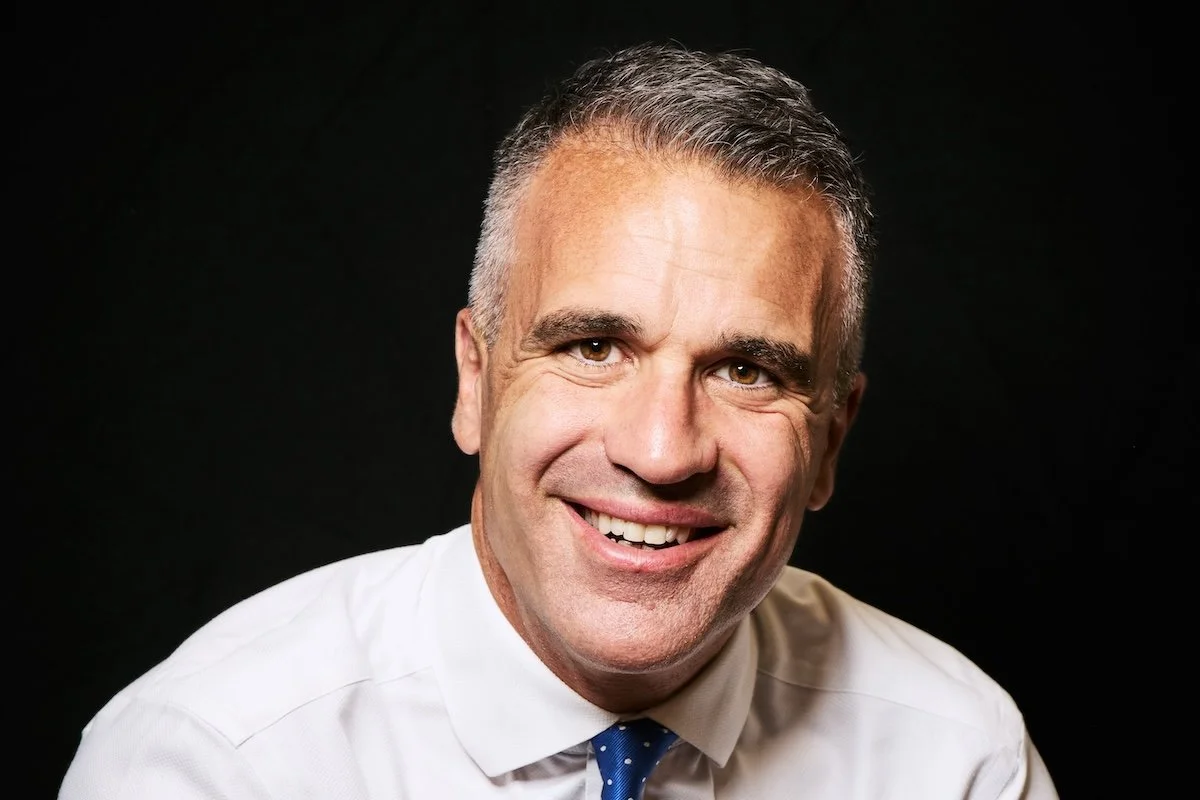
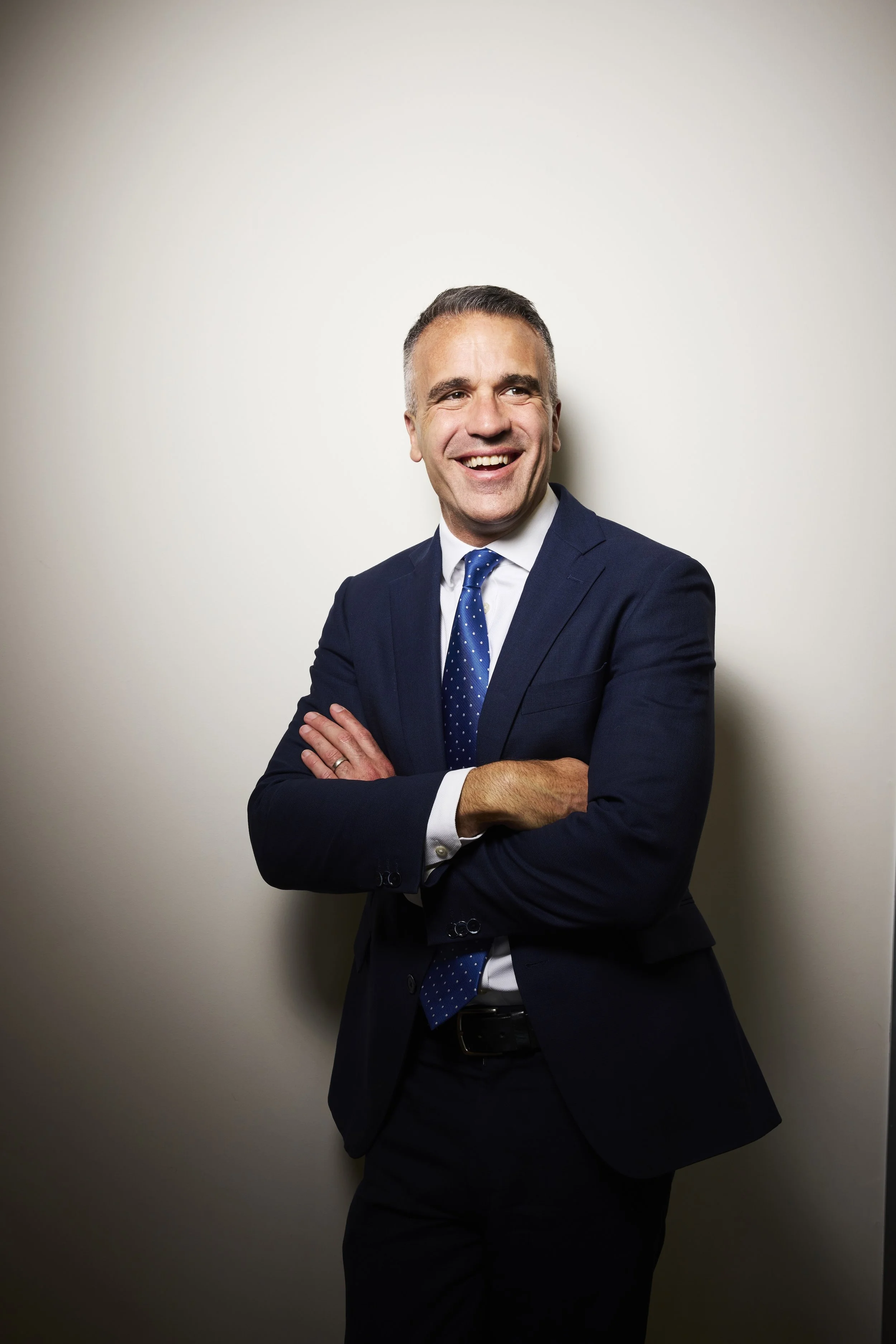
After a resounding win at the 2026 South Australian State election, Premier Peter Malinauskas took time away from shaping his new cabinet to talk with Monty about life behind the scenes and where he hopes South Australia is heading
When Peter Malinauskas describes his mornings, he doesn’t begin with policy or Parliament. He begins with what he calls “a bit of a circus.”
His alarm sounds at 4:30am. There’s exercise before the sun rises, a quick scan of the morning papers and overnight developments and then the narrow window between six and eight o’clock when the house quickly shifts from stillness to movement.
The shuffle of breakfasts and school bags, radios and interviews, all before the clock has struck nine.
“It’s pretty full on,” he says matter-of-factly. “But it’s also very rewarding.”
The portrait that emerges is not theatrical. There is no grand overture to power. Instead, there is routine: disciplined, crowded and deliberate. Yet there is a duality to the role that Malinauskas is quick to acknowledge. “You’re never not the Premier,” he reflects. It’s a phrase that once struck him as abstract advice. Now it feels literal.
It’s there in the supermarket aisle. In Bunnings. At school drop off. It’s there at home too. In the background hum of an email unanswered, a briefing half complete, a decision waiting for the next morning.
“That’s the hardest part,” he admits, when asked about balancing state leadership with fatherhood. “You’re sort of always… It’s always there.”
He doesn’t frame this as a complaint. “It’s part of the deal,” he says. But he is candid about the tension. The challenge isn’t the workload itself; it’s preventing the weight of the office from overwhelming the personal moments that matter. A familiar modern dilemma – one faced by small business owners as much as the Premier of South Australia. The scale might differ, but the mental tug-of-war between responsibility and presence is largely universal.
Still, the stakes feel different when the decisions you make today might shape the state your future children inherit tomorrow.
When conversation moves to the future of South Australia, Malinauskas’ tone shifts – not to rhetoric, but to something closer to urgency. He speaks of opportunity with confidence and of risk with clarity.
What makes him optimistic? “The performance of the economy,” he says without hesitation. More specifically, the type of work now emerging throughout our state – advanced industries, defence, technology, renewable energy – and the prospect that young people might no longer feel compelled to leave in search of rewarding careers.
“Twenty years ago, young people in South Australia worried about where the work was coming from,” he says. “I’m not worried about that at all.”
It’s a fairly significant statement from a Premier in a state long shaped by the narrative of interstate relocation – the quiet exodus away from South Australia. Malinauskas, however, sees a reversal in motion – opportunity expanding rather than shrinking.
But optimism, in his mind, is incomplete without a touch of realism. A notion that becomes immediately apparent when the conversation steers itself toward the livelihoods of the state and its locals.
“The one on my mind more than anything is housing.”
Here, his personal and political worlds intersect. His eldest child is 10. And a decade feels both distant and alarmingly close. “Her birth feels like five seconds ago,” he says with a half-smile. “And then all of a sudden she’s going to have to start saving for a deposit.”
Housing, for Malinauskas, isn’t merely a market mechanism, it’s part of what he calls the Australian “social compact” – the intergenerational expectation and assumption that hard work and stability should immediately translate into the possibility of home ownership.
If South Australia succeeds in maintaining and attracting talent and generating jobs but fails to increase its housing supply, he argues, the equation crumbles.
“We just have to increase housing supply.” His repetition in phrasing feels like a deliberate narrowing of focus. And it is. Water infrastructure. Planning laws. Tax settings for first home buyers.
“So many levers we can control,” he says. Leadership then, in this context, becomes a matter of “applied energy” according to Malinauskas. “You’re best spending your effort worrying about the things you can control.”
He speaks of momentum – of building more homes each year, of policy decisions made early in the term beginning to show results. His instinct is not to plateau. “I don’t even want to keep my foot on the accelerator,” he says. “I want to find ways to press it harder.”
It’s an image that suggests impatience, but it’s tempered by perspective. Housing challenges, he acknowledges, are decades in the making. Solutions won’t materialise overnight. The task is to begin decisively enough that the benefits are felt years from now – when today’s 10-year-olds are 30.
To understand Malinauskas, it helps to understand sport – not as a spectacle, but as a kind of social glue.
“I think it’s more important than it’s ever been,” he says of sport’s place in South Australia’s identity. In an increasingly multicultural and secular society, sport, in his view, operates as a universal language. A shared ritual that transcends backgrounds or beliefs. A meeting point of convergence and community rather than division. “The best examples of sport are where they are inclusive and welcoming of people regardless of their backgrounds.”
He distinguishes between professional and grassroots arenas. While he appreciates elite competition, it’s community sport that he speaks most fondly of – the post-match conversations, the authenticity found at local clubs, the friendships forged in these environments.
READ MORE: Through the Lens of Curiosity: The Expansive Vision of Alex Frayne
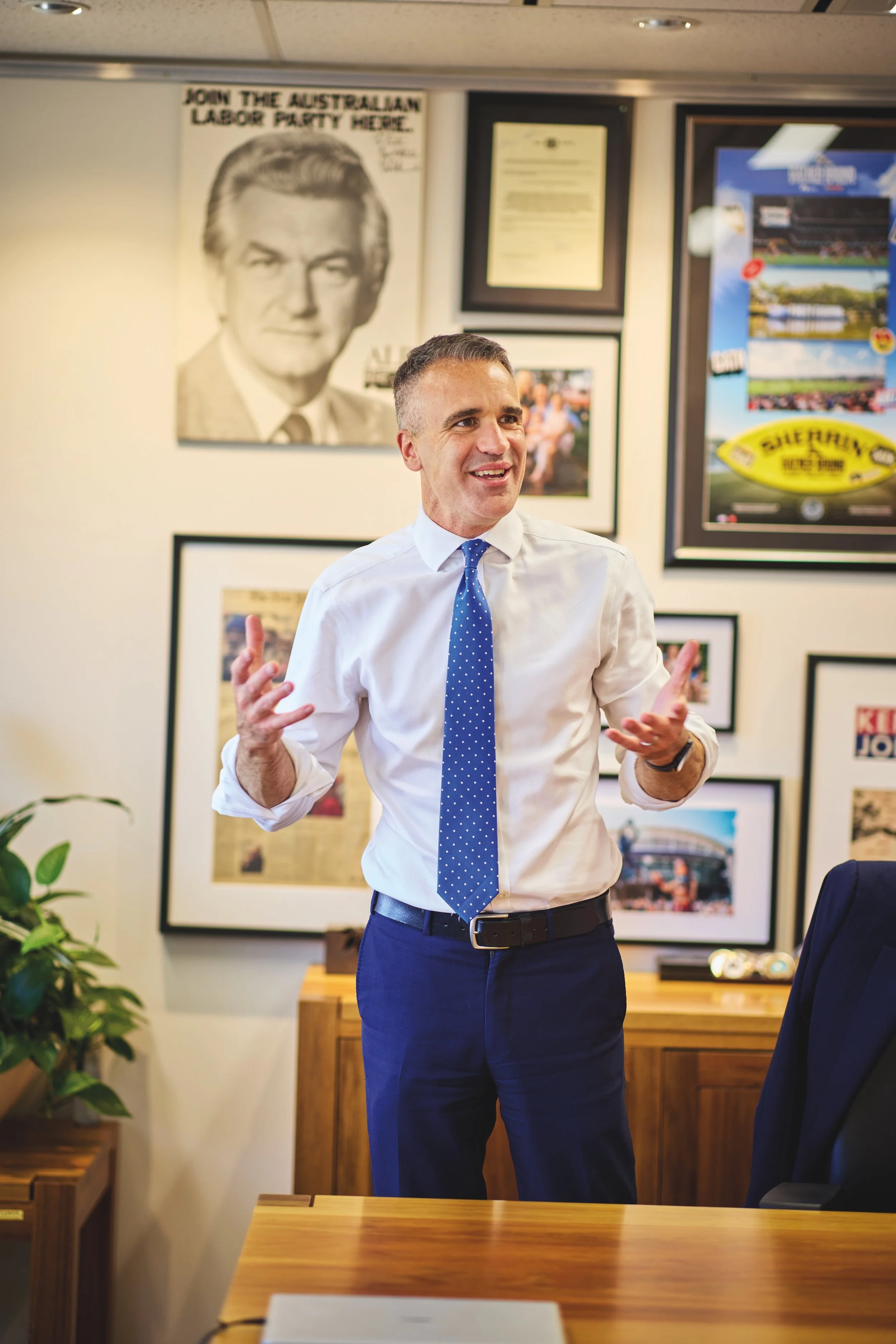
When he stopped playing footy a few years ago, it wasn’t the physicality or the spectacle that he missed most. “What I pine for is that engagement,” he says. The beer after the game. The energy. The camaraderie.
It’s easy to see how this combined passion and sensibility continues to inform his support for major sporting events in the state – Gather Round, LIV Golf and the Adelaide Test. For Malinauskas, their value extends beyond profit margins or tourism figures.
“People looking at South Australia differently,” he says, when asked what success actually looks like for these events.
Major events, he argues, invite attention. Not just to the stadium, the oval or the arena, but to the state itself. They transmit a sense of dynamism and possibility “down the television tube”, shifting and shaping perception both nationally and globally.
There are obvious measurable economic benefits, he notes. But there is also something less tangible: a change in the narrative. A growing sense that South Australia isn’t merely peripheral but is becoming increasingly central.
Among his favourite recent moments is cricketer Travis Head’s century at the Adelaide Oval, experienced with his son in the stands. And swimmer Kyle Chalmers at the Olympics, emerging from the pool to deliver what Malinauskas describes as a “statesmanlike” interview – humble, grounded, proud of his Eyre Peninsula origins.
“There was something very South Australian about it,” he says. Malinauskas has been Premier for just over three and a half years. He speaks of the role not as a finished mastery, but as an ongoing education.
“You don’t have a moment to lose,” he explains, reflecting on what he knows now that he didn’t at the outset. Government, he notes, is a “big, wieldy beast.” Policy takes time to translate into outcomes. Decisions made early can determine whether results appear within a term or beyond it. But decisiveness isn’t the only lesson. He also describes the necessity of resolve.
“Everyone will tell you reasons not to do things,” he says. “Sometimes you’ve just got to focus on the reason to do it.”
This, however, is not an argument for recklessness. Malinauskas recognises the apathy that can creep into large systems, the tendency toward caution so persistent that oftentimes nothing moves at all.
“Sometimes it just requires someone to say, ‘No, this is what we’re going to do’.”
Yet for all the talk of action, Malinauskas returns time and again to awareness – of pressure, of tone, of impact. A piece of advice from a friend has stayed with him in these recent years: when you hold authority, your words carry greater weight than you might realise.
“You might not have changed,” he says, “But you put a title on the door and all of a sudden it has more depth.”
He likens it to speaking through a megaphone. A simple request can sound amplified by virtue of the office, of the position, of the aforementioned title. There is also recognition that not all insight comes from the o ce, the position or the paperwork.
“You can read all the briefs in the world,” he says. “But sometimes you actually learn more just by talking to someone.”
When asked what quality Australians may underestimate in their political leaders, Malinauskas answers without pause: “Compassion,” he says. “I don’t see enough compassion in the body politic.”
For him, compassion is not softness; it’s perspective. The discipline of considering another viewpoint before dismissing it. The willingness to interrogate your own position.
“Complex problems… There are always two sides to an argument,” he says. “It’s worth thinking through the other people’s point of view.” He acknowledges that his own views have evolved over time, shaped by deliberate attempts to understand opposing perspectives. Compassion then, is not static, it is practiced.
“What’s the harm in that?” he asks. “It’s costless.”
As the conversation draws to a close, Malinauskas is asked how he hopes his leadership will eventually be described. He resists the invitation.
“Leaders, particularly political leaders, commenting on how they hope other people will see them… I think it’s probably an act of self-indulgence,” he says with a small laugh.
It is perhaps an instinct toward humility again, or at least an understanding that legacy isn’t self-authored. It’s shaped by time, by outcome, by perspective beyond one’s own. For now, he appears less focused on future characterisations and more on the present mechanics consistently operating in the economic foreground: housing approvals, infrastructure, economic momentum and community cohesion.
His days begin before the sun is up and often end at evening functions. They unfold across Cabinet meetings and sporting arenas, school runs and press conferences. The work is constant. Yet there is something measured in his approach – an underlying emphasis on employing control where control is possible, on empathy and perspective when division rises, on unwavering decisiveness when the apathy lingers.
Peter Malinauskas is a Premier aware that the title amplifies his voice. A father conscious that time accelerates, at what is sometimes an alarming rate. A sports enthusiast who sees a change room conversation as a foundation for community. In the quiet moments between meetings and milestones, there is perhaps a simple through-line: the measure of leadership isn’t only in ambition, but in attention: to people, to perspective, to the long game.