Through the Lens of Curiosity: The Expansive Vision of Alex Frayne
Jennie Groom
Driven by curiosity, Alex Frayne continues to chase the unseen through photography, documenting landscapes, people and the truths buried beneath
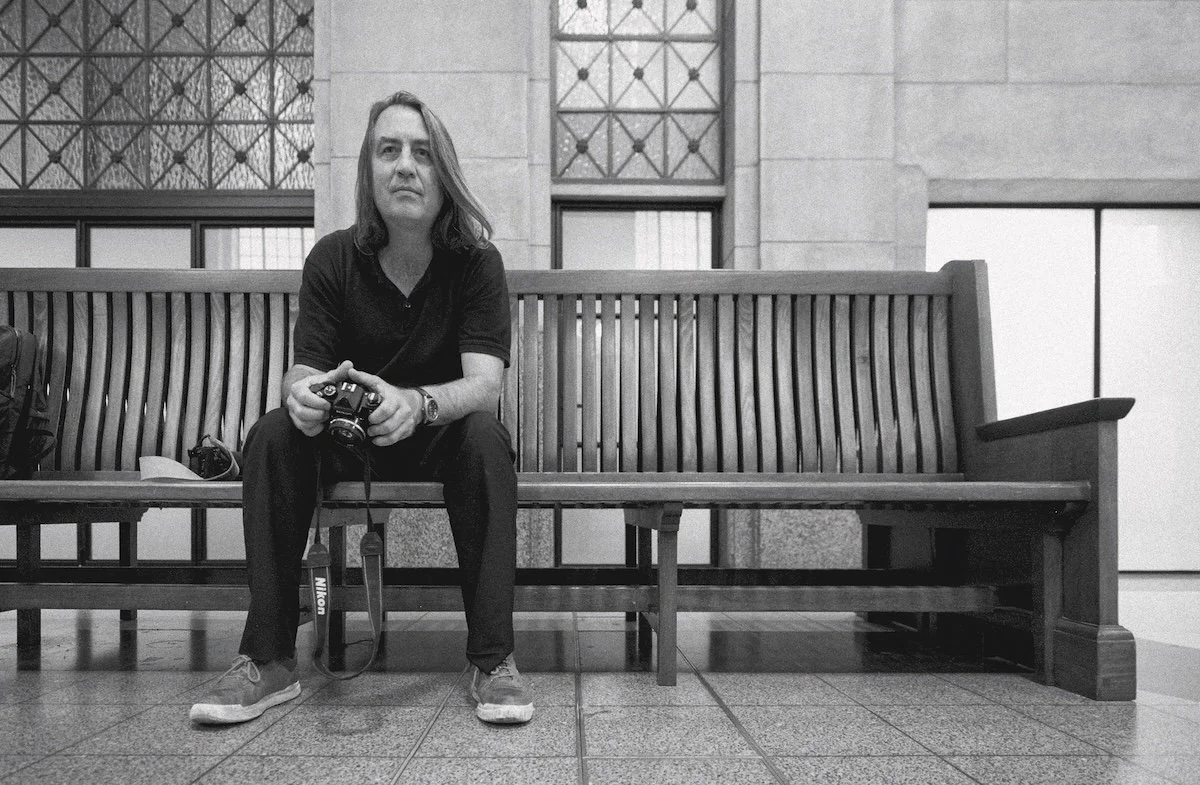
Speaking with acclaimed South Australian photographer Alex Frayne, it’s clear he sees the world differently from most. Renowned for his rural and city landscape stills that uncover the hidden underbelly of Australiana, there’s a curiosity to Alex that creeps through not only in his photos, but his personality. The award-winning filmmaker, photographer and author views the world through a multidimensional lens that allows him to be present without disturbing the moments he captures. He’s drawn to the natural landscapes of Australia and the stories they tell.
“I’ve been to lots of countries in the world, and if you drive an hour from the centre, you’d still be in the city. We’re in a state where if you drive north, south or east, you’re into rural landscapes changing topographically,” Alex explains. “That became an interest of mine, to uncover the truth of South Australia through the lens. Yes, that’s kind of an artistic propensity to want to know something through the craft, to understand something, and perhaps understand yourself a little bit better by creating art. It’s the best thing about the business, this sort of discovery that happens continually: historical discoveries, indigenous discoveries, landscape discoveries, discoveries full of intrigue. These are the things [that] really get the furnace going.”
Alex’s creative fire was sparked by his mother, an actress and model who appeared in commercials and theatre productions throughout the ‘70s and ‘80s. Noticing Alex’s curiosity at an early age, she gifted him an 8mm camera as a young child. Alex quickly became fascinated with the world of film and all it entailed. He spent his youth experimenting with film before furthering his studies at Flinders University. This is where Alex got his blackbelt in film studies under the tutelage of the late great Noel Purdon, one of the pioneers of Australian film studies.
“He came with a single-mindedness, wanting to put cinema and the study of cinema on the same level as the study of literature,” Alex explains. “His three-year cinema studies course at Flinders Uni was venerable. He showed us the great works of cinema, the great European filmmakers, the French New Wave and the French intellectuals who cherished American film. And I say film, not movies, because there was a difference back then.”
Discussing his love for film, Alex lists the great filmmakers who had an impact on his work: Francis Ford Coppola, Martin Scorsese, Fritz Lang, Akira Kurosawa, Carl Dreyer and David Lynch, who he says was “pivotal” in his film education. He believes the lessons he learnt watching the masters helped develop his skills as a director, leading to his debut film, Modern Love. The 2006 psychological thriller was independently financed and filmed in South Australia, with Alex noting the process of creating the film was “quite difficult”. Despite the challenges, Alex is proud of the film, especially the small cast and crew involved with its creation, the majority having gone on to bigger and better things. This includes Alex’s good friend and award-winning cinematographer Nick Remy Matthews, who most recently directed the second unit of Alex Parkinson’s true story Last Breath, starring Woody Harrelson and Simu Liu.
Alex Frayne
While many of his friends and colleagues from that time continued to pursue film as a career, Alex found himself shifting focus towards photography. He began writing more scripts and “creating mood boards of images that aligned with the scenes.” Receiving more positive feedback for his images than the scripts he was working on, people began offering him money to purchase the location stills he had shot. Alex found himself at a career crossroads. “I could sell my images or continue writing scripts and maybe shoot a film every five or 10 years,” he says. “The answer [was] pretty easy. Once things get commercial, it’s kind of hard to go back. It just drew me onto another train track, with the destination being still [photography].”
Turning his artistic hand towards photography, Alex quickly made a name for himself with his startling landscape portraits. He has curated over a dozen exhibitions, has two images in the National Portrait Gallery permanent collection and has won an array of awards, including the recent Merit Award for the 2024 Atkins prize for Gallery M, SALA.
Of all the projects he’s been involved with, one of Alex’s most visceral and personal works was The Overseers of Streets. The 2020 exhibition put the spotlight on Adelaide’s homelessness crisis, with Alex snapping portraits of homeless people living in the Adelaide CBD. It was both compelling and confronting and impacted not just those who viewed the images, but Alex himself.
“The biggest takeaway from that project was just how close all of us [are] to that world. It only takes one thing [to] turn your world upside down and render a person homeless, carless, jobless or familyless,” he says. “The stories that I heard from people who were living this life were sort of unbelievable when you compare the life that they described before homelessness. The dichotomy there is astounding. It brings home the truth that we are all close to that precipice. It’s frightening. When you look down the lens and see the eyes of those people, and you think to yourself, at some point in their life, they were loved by a parent, by a child, by a work colleague. They were valued, and now they’re in a position where they appear valueless. And of course, they’re not. They still should be valued. And I think taking a photograph of them in those situations is a record, and a record of value is what I consider it.”
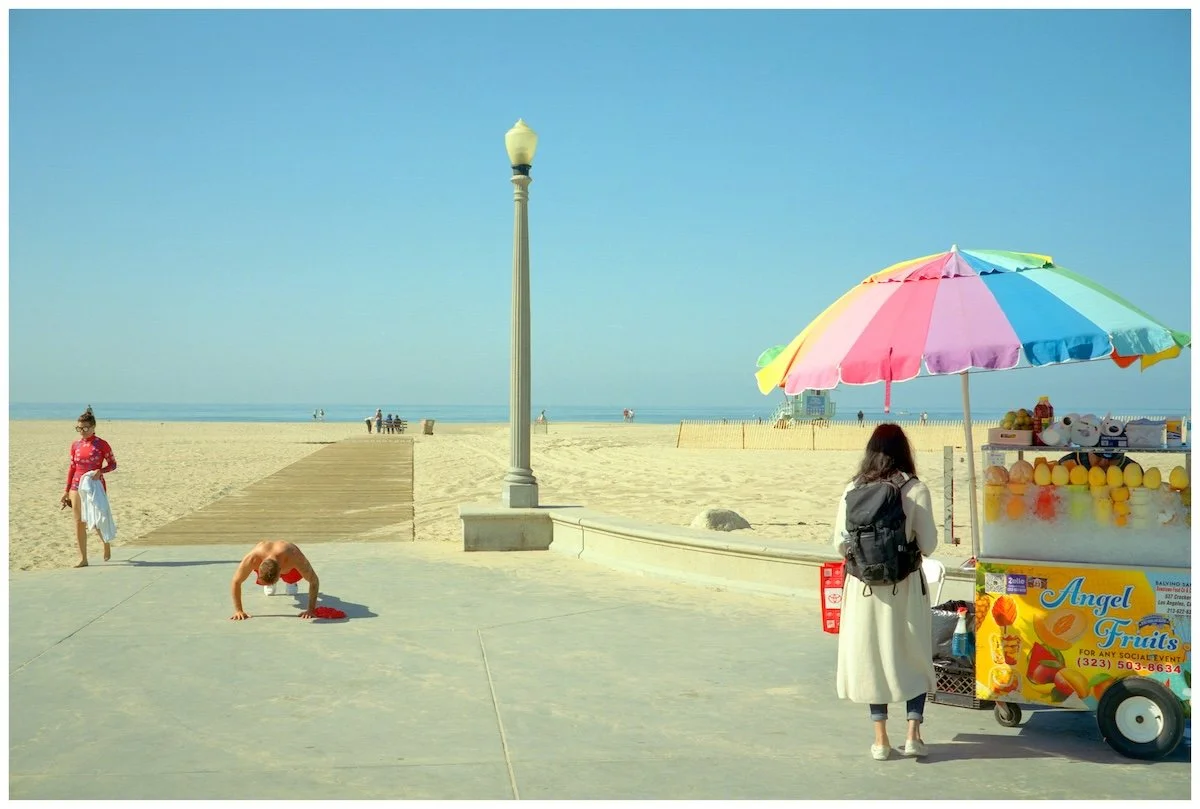
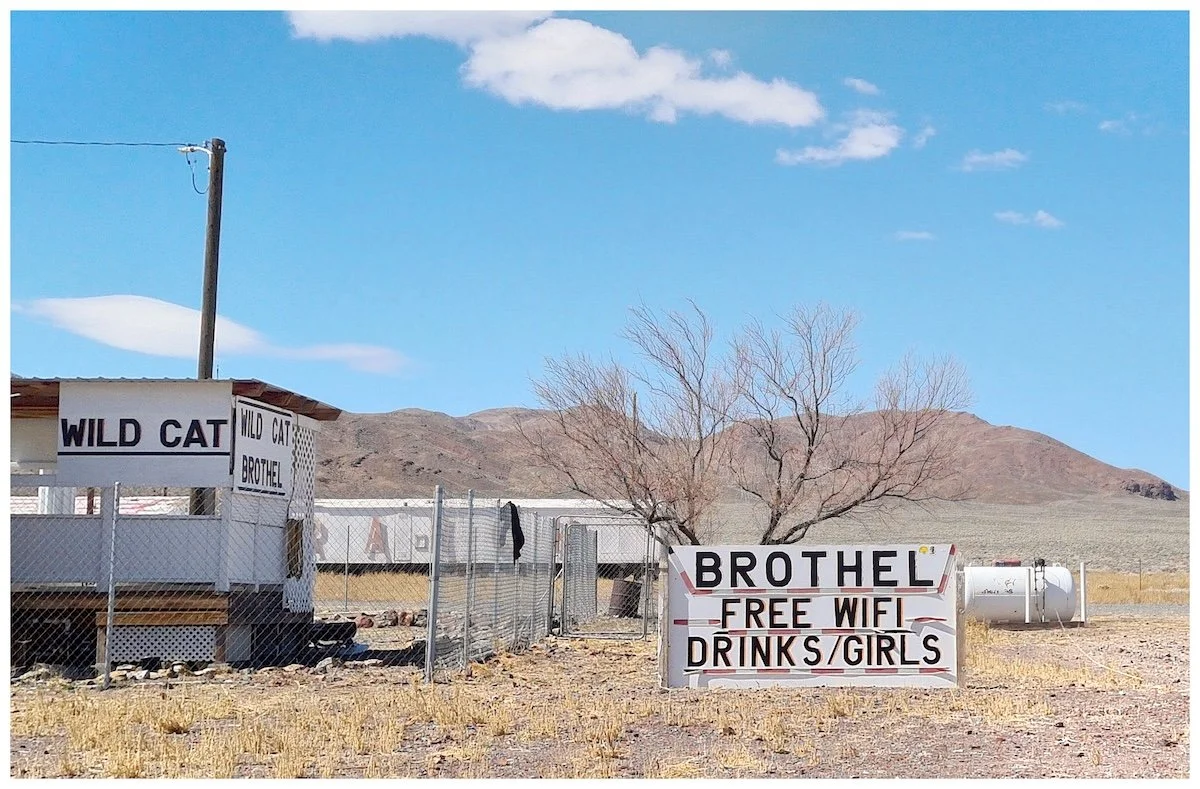
Alex’s interest in what lies beneath the surface of everyday life and his love of Lynch and the philosophies that weave through his films combine for his latest work, Manifest Destiny. Visiting America over a period of several years, Alex captured the West, Deep South and Bible Belt of a nation in crisis, using his lens to peel back the layers of a decaying American society.
“The opening scenes in Blue Velvet, for example,” he explains. “The white picket fences, and then the camera sort of zooms down into the grass, into the weeds, and goes to the subterranean, which is kind of allied to the consciousness and the unconsciousness of humanity and what lies beneath. This is something you sort of notice in America straight away: there is the surface, and then there’s the kind of subterranean geography of the place, psychologically, historically, religiously, sexually. [There is] something else going on.”
The images Alex shot for Manifest Destiny were taken before Donald Trump was elected President, during his first term in office and while he was running for re-election, providing a contrasting collection of stills reflecting American society. Over that time, Alex saw the way America changed and how people reacted to the circus surrounding Trump. He was spurred on by his curiosity about America and was “fed up with being told what a place was like by people who had never been.”
Alex Fryane
Plotting a path from west to east, Alex hired a car and travelled through California, Nevada, Arizona, Texas, Mississippi, Arkansas, Oklahoma, Louisiana, and Tennessee, peeling back the layers of what he calls a “dying America” through the lens of his camera. He spent his days photographing people and places, heading back to his hotel room to develop his film and before moving on to the next town. He described the experience as like being “a kid in a candy store”, with every place he visited, be it the sprawling city of Los Angeles to the ghost towns of Louisiana, offering a compelling vision of America’s slow decay. “There’s intrigue off the beaten track,” Alex comments, “as it were, to see the sort of ruined America, which is like two miles from these great big slithering snakes of interstate freeways.”
“It’s a weird place where people actually ask to be photographed,” he adds, referencing America’s obsession with social media and fame. “You don’t experience that here in South Australia; they’re much more reticent. There’s sort of shyness about Australians, which you do not see in America, you know, the idea of fame and images. It’s a culture that has grown up with film, and it’s incredible to experience that openness. It’s like this great big open book.
Unsure of how to bring his images together in a cohesive exhibit, Alex took inspiration from the Las Vegas Strip. Comparing it to a “great big LED screen”, Alex developed the notion of presenting his work in a multimedia format, or what he calls an “analogue capture to digital interpretation.”
To bring Manifest Destiny to life, Alex has collaborated with digital artist Liam Somerville (Capital Waste) and composer Donnie Sloane to transform his 2D photos into moving images accompanied by an ambient soundtrack in ILA’s immersive studio.
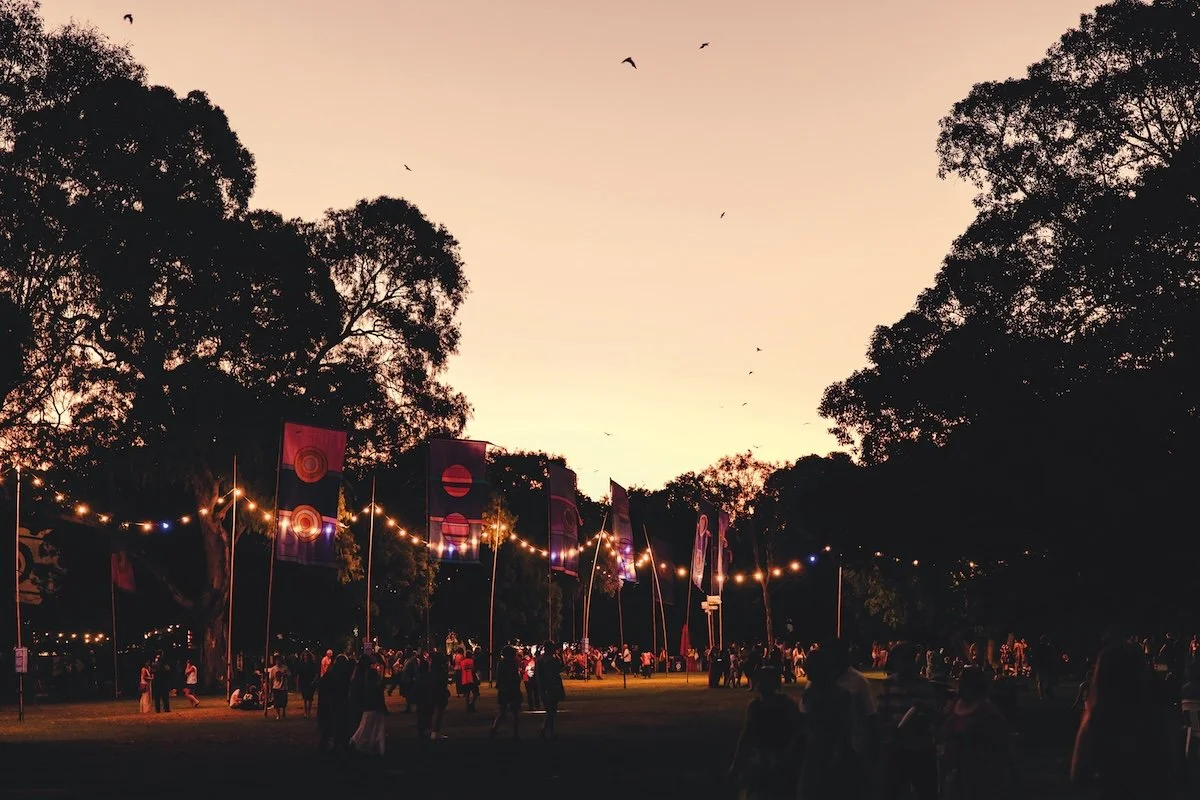
Having first worked with Liam at the 2024 Adelaide Fringe as part of the immersive light and visual showcase Dead Light, which featured Liam projecting lights onto the surrounding trees while Alex’s photos appeared on a large screen, Manifest Destiny is an extension of their previous partnership, highlighting Alex’s work in a new, contemporary format.
Donnie, on the other hand, is a longtime friend of Alex, who is best known for his work with Sneaky Sound System, PANU and Empire of the Sun. Noticing how music is everywhere in America, whether walking through a suburban strip mall or strolling the streets of New Orleans, Alex asked Donnie to create something ambient to accompany Manifest Destiny. The two settled on vaporwave, a microgenre of electronic music that Alex explains is “very much mood-driven” and taps into ideas of memory and nostalgia.
Collaboration is something Alex believes is essential in the arts. He refers to it as “expanded photography”, a term coined by his producer, Julianne Pierce. It enables him as an artist the opportunity to go beyond stills on a wall and create something completely new.
As Manifest Destiny lands at ILA next year, it marks another bold step in Alex’s evolving practice as an artist unafraid to push beyond the familiar and chase the world’s harder, stranger truths. For Alex, every project is a doorway to the next, and his curiosity shows no sign of dimming. If anything, it’s gaining momentum. And wherever that curiosity leads him, his lens will be ready.
As for Alex’s next project?
“There might be a few more trips coming up, and perhaps more collaboration down the track,” he says. “I've done the Sun Belt, Bible Belt and Deep South. But then there's the Rust Belt. There's the industrial north, the Great Lakes. There's the sort of South in the east, east and south, which is Florida. There’s a lot more to cover, and I think I'd probably feel that I've stopped too early if I were to sort of move on.”
Manifest Destiny takes place at LLA from February 28 to March 15 2026. Tickets on sale now via immersivelightandart.com.au.