South Australian Icons: Peter Combe
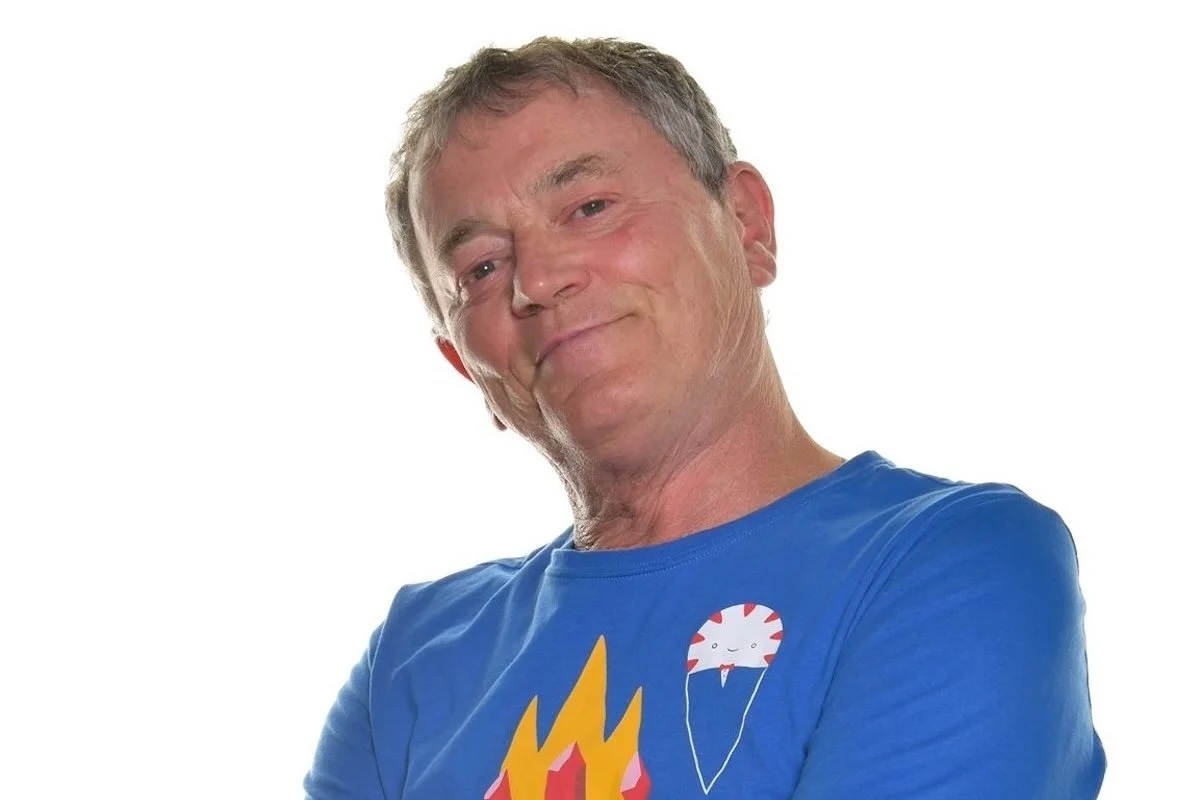
Supplied
In each issue of Monty, we highlight a South Australian icon who deserves to be recognised for their achievements, from famous faces to cultural objects that haveshaped our state.
Before The Wiggles, before Hi-5, there was Peter Combe. A former primary school teacher who found his calling as a children’s entertainer, Combe is responsible for soundtracking the formative years of kids across Australia throughout the ‘80s.
His most recognised song, ‘Mr Clicketty Cane’, has become an anthem for Aussie kids. The opening line remains iconic: “Wash your face with orange juice / Clean your teeth with bubble gum.” It might seem absurd, but it’s a song that’s had kids laughing and dancing for almost four decades.
Born and bred in SA, Combe was the third of three children who grew up on a diet of the Springfields, Simon & Garfunkel, Bob Dylan and the like, learning how to sing and play piano at a young age.
Pursuing a career as a teacher, which led him to Prince Alfred College, Combe never lost his passion for music, often writing songs for his students. But the allure of the stage proved too much, and Combe made the move to Sydney to further his career. He wanted to be the next Paul Simon, but as he told ABC’s Throwback in 2018, Combe “quickly realised there is only one Paul Simon.”
While his dreams of international superstardom didn’t come to immediate fruition, Combe did appear in the rock musical Sergeant Pepper’s Lonely Hearts Club and gigged consistently in pubs around Sydney while teaching during the day.
In 1977, Combe packed up his family and moved to the UK, where he scored the role of co-presenting the BBC’s Music Time, an educational show introducing young children to music. While he enjoyed his time in the UK, gaining television experience, the pull of home was too strong, and Combe returned to Australia in 1979, becoming a presenter of the ABC radio program, Let’s Have Music.
Combe never stopped writing and playing music, eventually laying down tracks for his debut record, Vagabond. The 12-track release featured a mix of originals and covers, including the title track, which was recorded by the Seekers in 1977. The album failed to make an impact, leading Combe to shift his focus back to children’s music, where his true talents as an artist and performer lay.
Quitting his career as a teacher in 1982, Combe became a full-time children’s singer-songwriter. “I thought, ‘If I don’t do it now, I might never do it’, so I did it,” Combe told ABC’s Throwback. “The first 20 songs I ever wrote were terrible. The critical thing is, I knew they were terrible. I simply took an old reel-to-reel tape recorder and recorded these songs onto a cassette. I first sold these cassettes to family and friends. Well, the word got out.”
That early cassette, originally titled Songs For Little Kids (then Happy Singing and now known as Wash Your Face In Orange Juice), was unlike children’s albums of the time. Instead of the standard nursery rhymes heard on similar albums, Combe wrote his own songs with funny lyrics and catchy hooks. He used humour to connect with children, understanding that if he could get them giggling and dancing, then they would become more responsive and form an interest in music and performing.
“All false modesty aside, I was a pioneer,” Combe remarked in a recent profile by The Guardian. “Literally no one was doing it. I had no interest in singing nursery rhymes. I remember thinking, there are authors all over the world who write new stories for children – why don’t people write them new songs?”
Selling tapes to family and friends, Combe began performing at schools, playing over 200 gigs across three years before releasing his follow-up album, Spaghetti Bolognaise and More Songs for Little Kids (now known as Spaghetti Bolognaise). An eight-month stint in the UK followed, where he wrote his third and most impactful children’s album, Toffee Apple.
On his return to Australia, Combe met with the head of ABC Music, Diana Manson, and together, the two filmed a music video for ‘Toffee Apple’ to promote the album. The film clip, which features Combe performing the song surrounded by a group of kids eating toffee apples, was a hit and helped establish Combe as Australia’s number one children’s entertainer, with Toffee Apple going on to win the inaugural ARIA Award for Best Children’s Album at the 1988 ARIA Awards.
It’s been nothing but gold plaques and sold-out tours since, with Combe having gone on to release a total of 18 albums, won a further two ARIA Awards and been awarded an Order of Australia Medal (OAM) in 2020. He has also found a new audience, with the children he once entertained now all grown up and attending shows. Combe now finds himself performing to kids during the day and in the evening, with many dressing up and singing along boisterously at his shows. His influence extends to modern children’s entertainers, while his ticket sales prove his music continues to resonate with kids and adults alike.
Combe’s songs endure not just because they’re catchy or of a certain time, but because they capture the pure joy of childhood – being silly and having fun – and that’s why he’ll forever be a South Australian icon.
It remains the highest score by a nightwatchman and what Dizzy is best remembered for on field, despite his prowess as a fast bowler. With his Australian career coming to an end in 2006, Dizzy spent several seasons in the UK playing for Yorkshire and Glamorgan. He also had a stint playing for his hometown team the Redbacks, before calling it a day and entering the coaching merry-go-round. He transformed Yorkshire into a title-winning team in five seasons, winning back-to-back championships in 2014 and 2015. Although his stints coaching South Australia and Pakistan were less successful – he resigned from his role with Pakistan less than 12 months later due to a lack of communication between him and the board – he remains highly respected in the world of coaching.
Along with being one of South Australia’s greatest sporting icons, Gillespie is a descendant of the Kamilaroi people and the first Indigenous male to wear the baggy green. Proud to be recognised for this achievement, he is more concerned with reaching young Indigenous children and getting them into sport. “I think the key is continually looking to provide opportunities for kids to be able to play,” Gillespie said in an interview with the Daily Telegraph in 2023. “And I think that’s the key for what we want as a sport in general, we just want more people playing, more kids playing and certainly more Indigenous kids just falling in love with the game and seeing it as a viable option. That’s what we want, isn’t it? We want Indigenous kids to see cricket as a viable option.”
Eight months removed from his disastrous flirtation with the Pakistan cricket team, Gillespie is reportedly unsure if he will re-enter the coaching ranks, with media opportunities beckoning. Whether he decides to get back in the nets, jump behind the microphone or cheer from the sidelines, Dizzy’s story will continue to inspire a new generation of cricketers. For South Australians and cricket lovers the world over, Jason Gillespie is more than just a cult hero – he’s an Aussie icon.