Where Everybody Knows Your Name
The Grace Emily / Andre Castellucci
When a long-standing ritual begins to fade, it rarely returns in full. As more public houses are demolished or gutted, what disappears with them isn’t just architecture – it’s the memories, the stories, the people. A Friday night at the Crown and Anchor’s final weekend brings into focus a timely question: what truly makes a pub, a public house?
There’s a particular cadence to an Australian pub at dusk – the echo of pool balls breaking, the lingering scent of beer soaked into timber and tile and the gentle buzz of a week put to bed. It’s 6pm on a Friday and we’ve stepped into Adelaide institution Crown and Anchor – better known as The Cranker. A dive to some, but an icon for most. For over 170 years, it has anchored Adelaide’s East End. A living, breathing part of the city’s cultural memory – it was almost flattened for another high-rise.
Unlike the King’s Head or Wright Street Hotel – now silent and boarded up – The Cranker didn’t just survive; it thrived in its final months, thanks to a groundswell of support that defied international investors.
Others have quietly slipped away, replaced by slick apartments, steel facades and architectural sameness designed for Instagram, not for the people. So why did tens of thousands fight for this pub when so many others disappeared unnoticed?
Because this isn’t just about the building. It’s bigger than that. It’s about the ritual. It’s about the community. The familiar Friday night faces. Some cheerful, some gruff. It’s one of the last remaining places that understands what a pub should be – a Public House.
To mourn the loss of a pub like this isn’t an act of nostalgia. It is an act of cultural preservation. Because once you start removing the worn wooden stools, the wonky pool tables and the beaten-up dart boards, along with them go the memories and stories of the thousands of people who were there before.
So what makes a pub, a public house?
The Front Bar
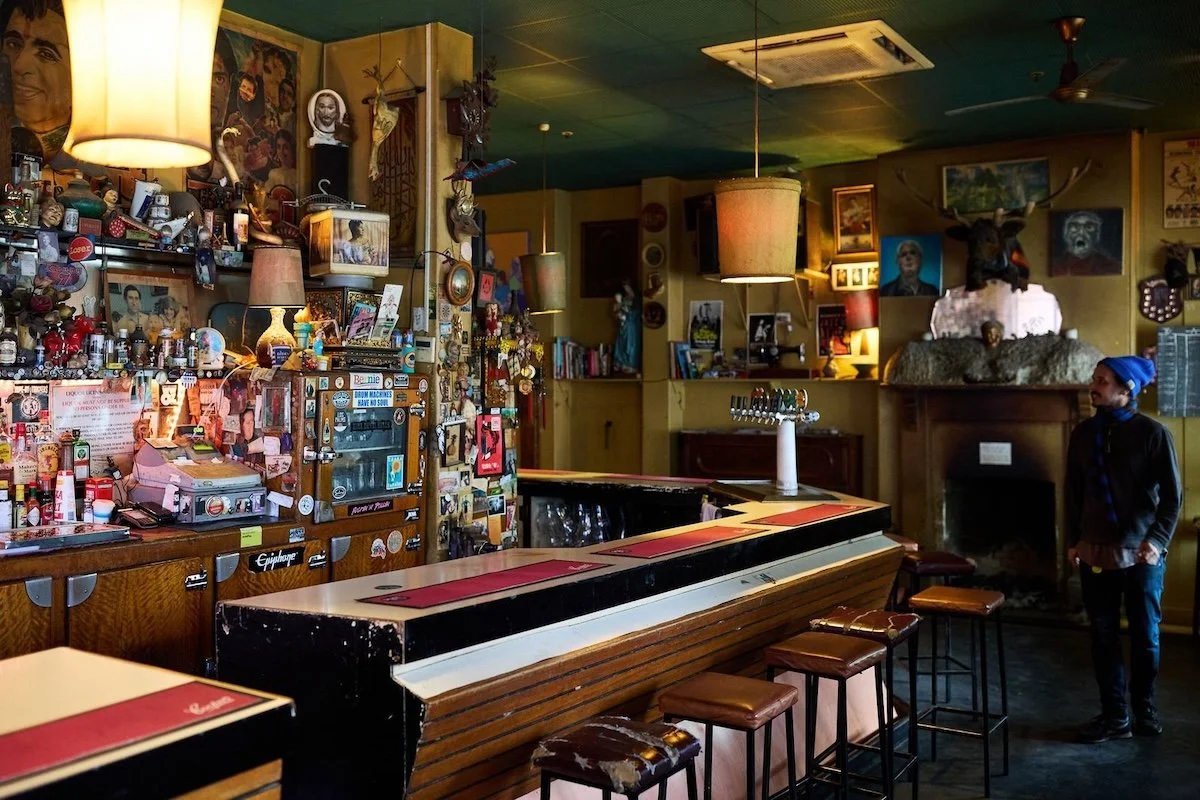
The beating heart of the venue. A wooden bar darkened by decades of use. While it’s not the easiest surface to clean after decades of spilt drinks, stainless steel doesn’t hold stories like pine. The back wall, a shrine to oddities and knick-knacks. Each one tells a story, placed by a half-pissed patron years ago. This isn’t a place for scrolling. It’s a place to sit and wonder, “Who was the first to tuck foreign currency behind the bar? What’s the deal with the cans of Spam?”. If the walls could talk, they would spin tales until the taps run dry.
Pool Table/Dartboard
A maker or a breaker of friendships. A wobbly pool table where only the regulars know the left-to-right lean. A dartboard with worn-down chalk from keeping score over the years. Cobbled together “trophies” made from Cheezel packets hint at competitions that have taken place over the decades. One man’s trash is another man’s treasure. But it’s not the game that matters. It’s the silence that doesn’t feel awkward, because sometimes a half-warm pint and a crooked pool cue says everything between mates more than words ever can.
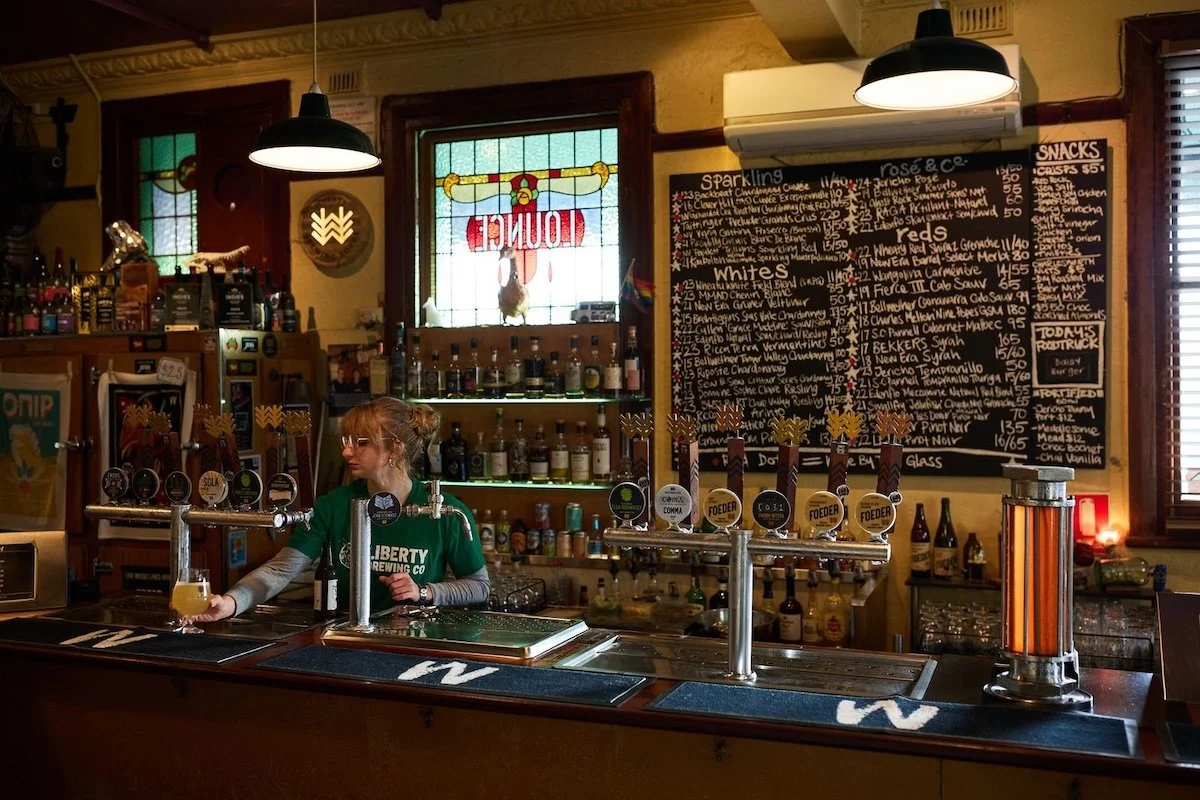
The Wheatsheaf / Andre Castellucci
The Soundtrack
A proper pub provides a soundtrack. Not from algorithms, but curation. Whether it’s Willie Nelson telling a whimsical story on a quiet Wednesday, thundering power chords of Status Quo on a Friday, or a local three-piece fumbling their way through their first set, music in a pub isn’t just background noise. It sets the mood. And when the patrons control the playlist – whether by coin or by chord – it turns background noise into something communal.
The History
It’s the feeling you get knowing you’ve sat in the same place as thousands of people spanning a century. The staircase worn smooth by boots and bad decisions once led to an upstairs room that played host to a weary traveller or something more clandestine. Faded letters carved into the bar top are barely visible now. A faint “+” between initials. Lovers? Likely. Still together? Less likely. Or maybe it was a punter immortalising a long shot that came good. Like the Somerton Man, the story’s there – but the meaning’s gone with him.
The Corner Location
In the early days, a corner site meant easier access for horse and cart – barrels in, patrons out. Over time, that corner placement became part of the pub’s identity, a beacon to travellers, tradesmen and toffs alike. You didn’t need to find it – it was there waiting – welcoming.
The Publican
The custodian, the keeper of stories and the legacy that goes with them. While we take photos, Sym from the Grace Emily still has a piece of ceramic, kept in a hospital cup, dislodged from a patron after a tumble down the stairs. Jade from The Wheatsheaf tells a tale passed down over a century – one that begins with a shotgun in Burra and ends with a baby born in the pub.
The Regulars
The same faces on the same stool, the publican knows their name, when to cut them off and maybe even a guardian’s phone number, just in case. There are characters, too. Some drift into folklore – elderly gents with slick dance moves, a Jesus-esque pool shark and the oddly wealthy bloke who shouts the bar without blinking. No one can confirm how he found his fortune, but many speculate.
The Community
No matter who you are, where you’re from, your class, your race, or your background, a pub should be welcoming to all. After all, a public house is for the public. At the Cranker, the pool tables are gone now, with only shadows left behind. Whether the same pub returns remains to be seen, but for now, its spirit lives on at the Ed Castle – Adelaide’s first licensed venue.
In the end, it’s not the tap list or the fit-out that makes a pub. It’s a feeling – familiar, unhurried, and quietly welcoming. A place where you can be known or left alone. Sink into the stories or create new ones. Some pubs are grand. Most aren’t. All it asks of you is to come as you are.