Power Dressing for Success
Supplied
How Henry VIII used fashion as a political weapon to cement Tudor power, assert dominance, and overcompensate in increasingly elaborate ways
We all know of Henry VIII. He’s the infamous monarch with six wives, an imposing stance, and a penchant for beheadings. With such a reputation, it’s hard to believe that when Henry came to the throne his position was precarious. His father, Henry VII, had usurped the throne from Richard III (the king in the car park), and many nobles questioned the Tudor claim. Henry VIII’s ascension in 1509 therefore presented the perfect opportunity for the energetic 17-year-old to assert and advance Tudor supremacy. How did he achieve this? Power dressing.
THE FASHION POLICE
As the highest-ranking person in the realm, Henry VIII was expected to wear clothes that set him above all others, reflecting his status and right to rule. Henry’s first act as king was to introduce extensive sumptuary legislation which restricted clothing based on social rank, ensuring no one outshone him. The ‘Act against wearing of costly apparel’ of 1510, for example, established that no one except the king and his family were allowed to wear the colour purple.
Failure to observe Henry’s laws could be lethal. In 1513, Henry was enjoying a banquet with the Emperor Maximillian I when one of his own noblemen, the Duke of Buckingham, entered the room dressed in purple satin. This act of defiance publicly signalled Buckingham’s own claim to the English throne for all to see. The duke’s fate? Not long after, Henry had him executed for treason.
SARTORIAL ONE-UPMANSHIP
Henry VIII also enhanced Tudor authority on the European stage. When meeting with French King Francis I in 1520 at the Field of the Cloth of Gold, every detail of the two-week event was meticulously planned to ensure neither monarch would appear greater than the other. The kings did, however, find ways to subtly assert dominance through dress.
During the joust, Henry entered the arena wearing a coat that was cut and styled in a way that signified waves. These waves reflected Henry’s lordship over the narrow sea, including Calais. At this time, there was unrest over the English possession of Calais, with many hopeful that it would be returned to France. The political messaging behind Henry’s dress was clear. Calais had been ruled by English monarchs since Edward III’s reign. Henry’s coat silently but sternly warned Francis of England’s longstanding rights to this port city, letting his rival know he had no intention of relinquishing it. Francis did, however, get his own back when Henry brazenly challenged him to a wrestling match. Francis quickly dispatched the English monarch through his superior wrestling skills. The veracity of this incident is often questioned due to its absence in English sources – if I were Henry’s subject, I wouldn’t write about it either.
OVERCOMPENSATING
While Henry’s power dressing undoubtedly solidified Tudor rule, all good 16th-century monarchs knew, the only way to secure a dynasty was through male heirs.
Henry went through six wives in his quest for a male heir. His third wife, Jane Seymour, produced a son only for her to die 12 days later for her trouble. As the spare himself, Henry knew how important it was to have multiple heirs, and so his pursuit continued. As the years progressed and no more male children arrived, Henry’s fertility was called into question. Naturally, the king turned to clothing to give his manly image a boost. Enter the codpiece.
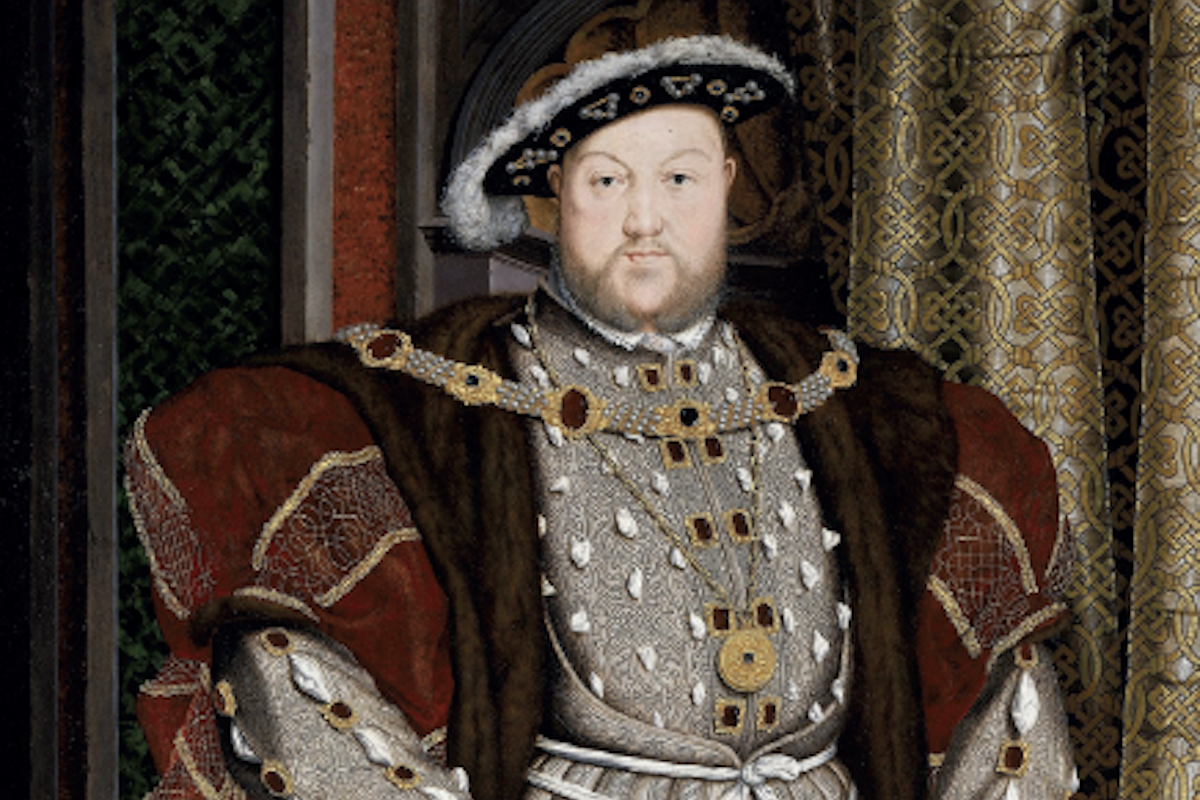
Originally designed for practical reasons, the codpiece evolved into a 16th-century fashion must have. Codpieces came in a range of redolent shapes which were finished with expensive silks, velvets, and even jewels. Representative of fertility, Henry’s cod pieces became larger and more ornate as he transformed from an athletic and virile man into the grotesquely overweight king we recognise today. Henry’s field and tournament armour of 1540 gives a clear indication of how the codpiece came to reflect Henry’s insecurities. Equally, Henry’s famous Holbein portrait cleverly uses the king’s broad shoulders and straddling stance to naturally draw the eye to his exaggerated manhood.
Dress was the cornerstone of Henry’s kingly authority, but fashioning royal power came with a hefty price tag. Henry spent 16,000 ducats a year to maintain his lavish wardrobe, which equates to over AUD$3 million today. While it sounds like the shopping budget of dreams, Henry’s sartorial spending was far from frivolous. The king’s lavish fashions were part of a carefully curated strategy to transform the Tudors from upstart pretenders to the most well-recognised dynasty in English history.