From Surf Haven To Selfie Mecca: How Mass tourism Is Reshaping Bali’s Uluwatu
Malcom Sutton
Since COVID-19 restrictions lifted in 2022, Bali’s tourist economy has skyrocketed, but it’s not all good news. Writer, surfer and frequent visitor Malcolm Sutton gives a firsthand account of how the influx of tourists is impacting the region
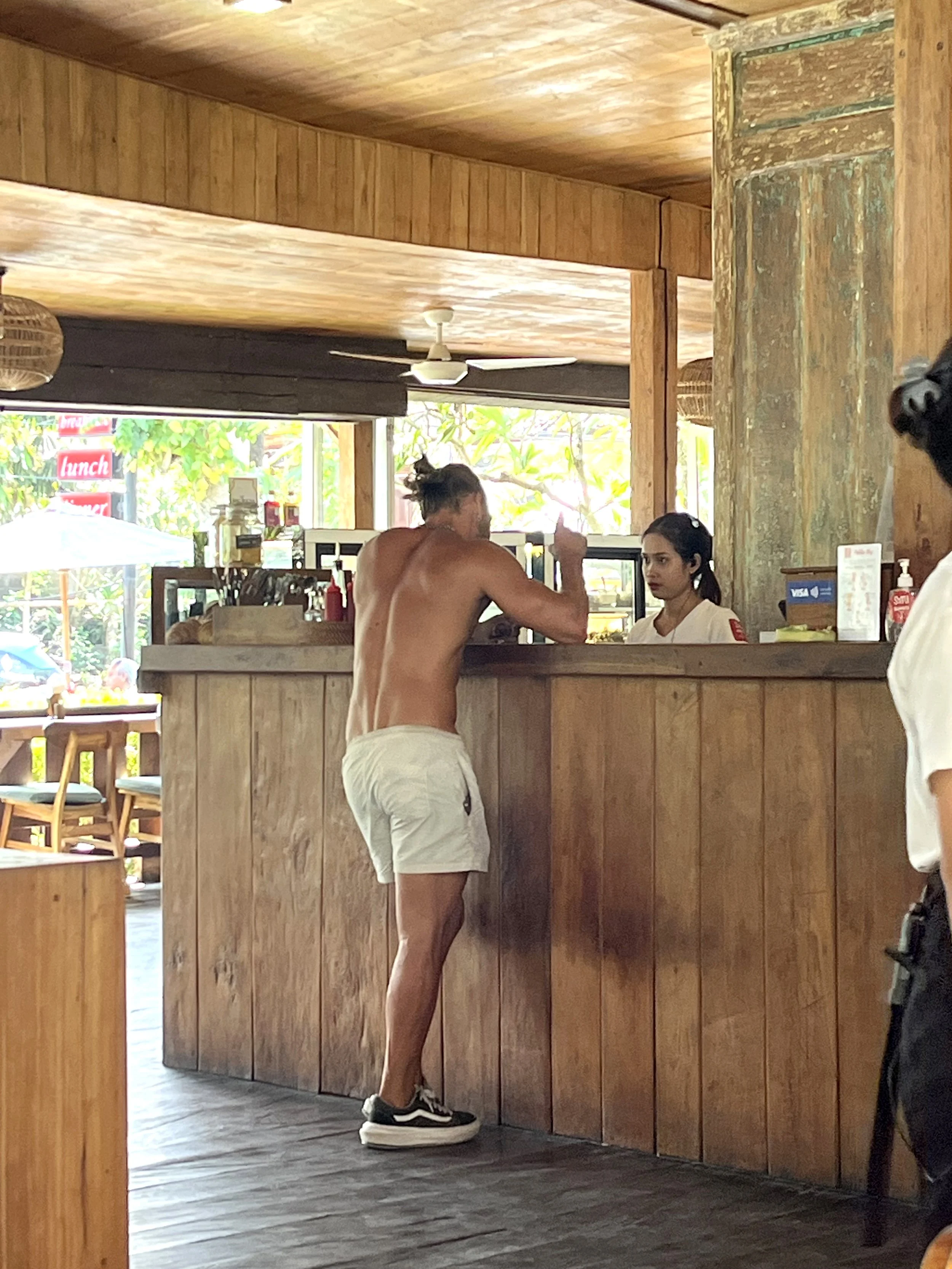
There’s a point when you’re waiting behind a bare-chested European showing off his tattoos and gym-manicured muscles to a Balinese woman with tired eyes that you wonder if past attitudes towards servitude still exist for hospitality workers.
He barks, demanding a coffee with a milk substitute, leaning over the woman with his mouth ajar as if he could slurp her up, while behind him await more with their own commands.
Most are in excellent shape, most are at least a third taller than the Balinese who wait on them, and all have ignored the sign at the café entrance politely asking customers to wear a shirt.
It’s high season for Bali where, according to Gusti Ngurah Rai International Airport, a whopping 4.8 million foreign national tourists arrived between January and August 2025 alone.
The woman takes all the orders in a patient voice, then looks upon me as I make my own, but there’s little recognition despite me being here every day this week, no acknowledgement of my attempt to order in Indonesian.
She’s working six days a week and, frankly, is too tired to care about Westerners with notions of cultural awareness.
For her, we are an endless stream of money bags waiting to be fed, a mass of mostly white flesh, conjoined and twisted together regardless of our nationalities, and we probably earn more each week on our holiday pay than she will make in three months.
After all, the minimum wage here is about 350 million rupiah a month, or roughly $350AUD, and while some restaurants pay their staff more than this, it’s still barely a blip on what the Westerners in Bali are earning – both tourists and the digital nomads.
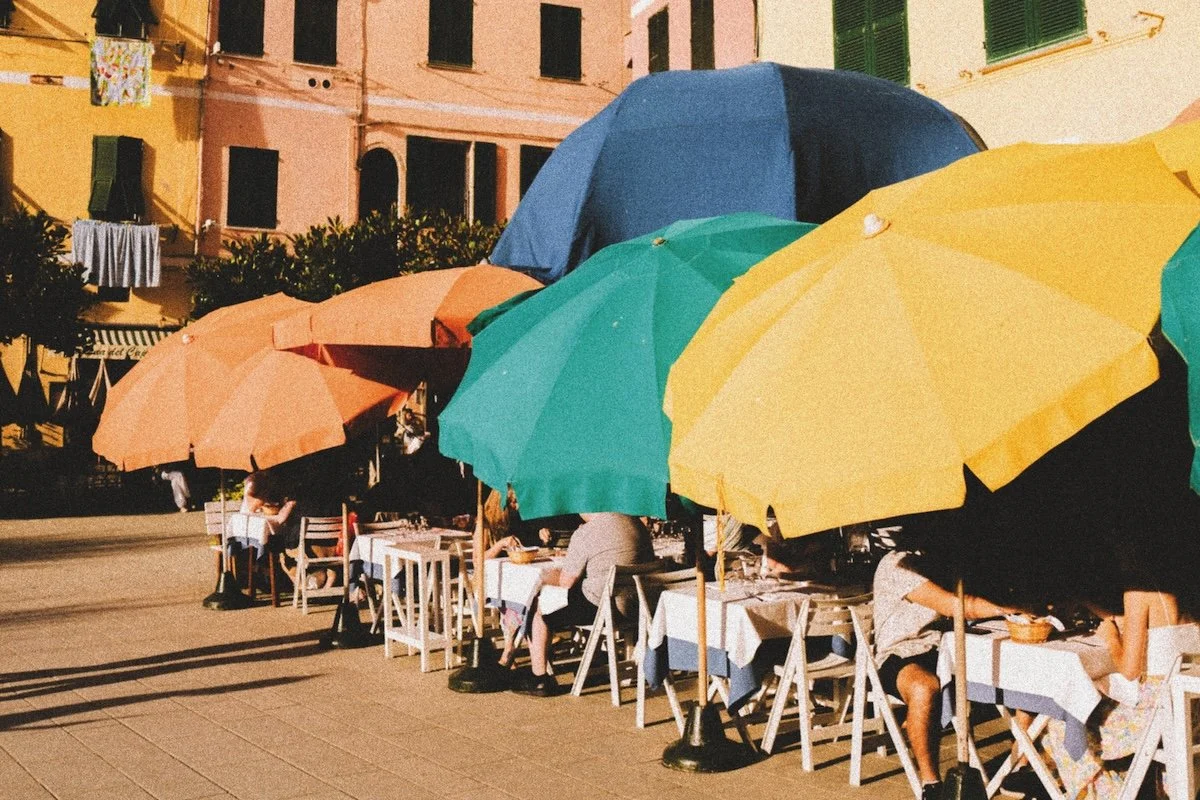
The trendy young “bule”, or foreigners, pack out the restaurants, stand in queues that stretch out the door, looking at their second lives on Instagram, taking more selfies, posting them online, patiently occupying themselves with self-promotion as they wait to enter a place that’s been algorithemed to the top of the trend list.
They used to clog up the streets of Canggu, but since COVID-19 restrictions lifted, they’ve spread to Uluwatu like an infection.
It was probably inevitable. Everything here is photogenic – high cliffs towering over powerful surf, statues of Hindu gods, frangipanis floating about to decorate the lot – in an age where life doesn’t exist for some unless it’s been posted to social media, Uluwatu’s a veritable mecca for the selfie crowd.
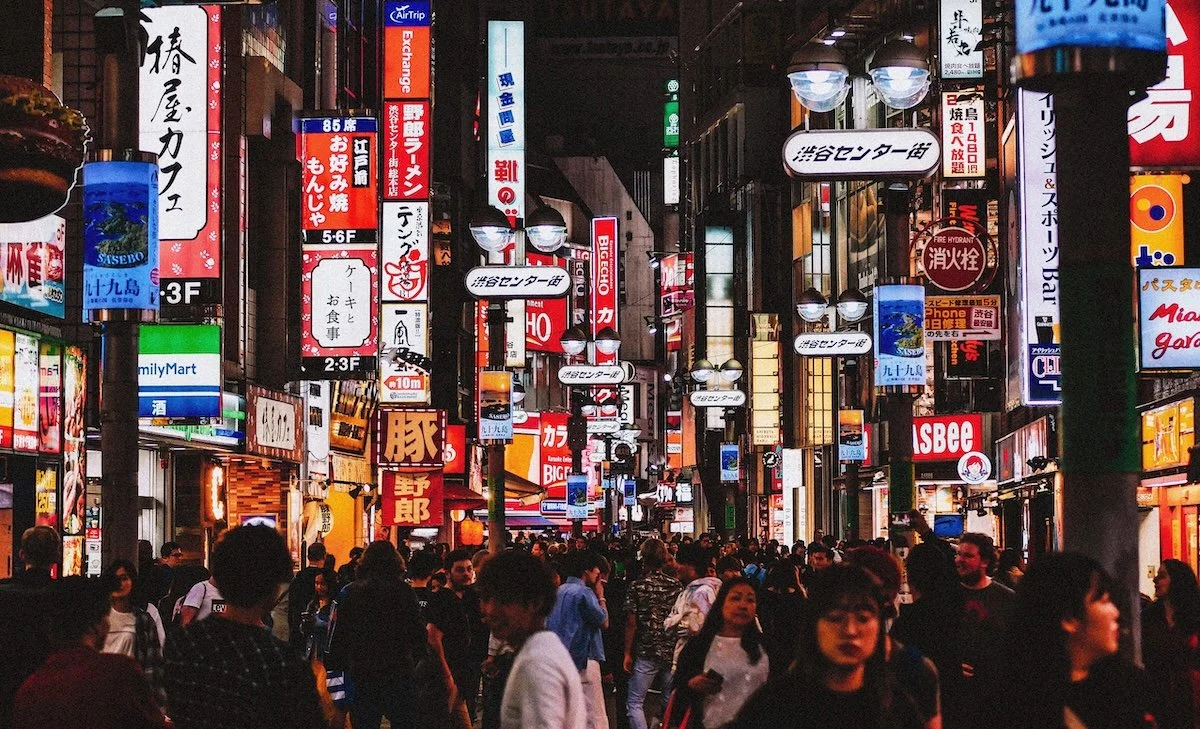
READ MORE: From Shibuya To Asakusa: A Curated Guide To Tokyo
Malcolm Sutton
Their arrival has ignited an explosion in foreign and locally-owned development – farmland carved up for villas, old shops replaced with franchises, restaurants replaced with nightclubs pulsing dull, formulaic DJ bass into neighbouring accommodation.
What used to be the relatively quiet domain of surfer and yoga tourists is getting developed at a breakneck pace and landholders are making a lot of money.
But not everyone is happy.
There’s the popular restaurant forced out of Uluwatu by a landlord who raised their rent in order to lease the land to a clothing franchise.
There’s the popular barber forced to relocate for new accommodation, and who grumbles about the dwindling number of locally-owned businesses in Uluwatu.
There’s the crowded surf where you’ll have to compete against hungry travellers from all over the world, an increasing number of which are Bali beginners with no understanding of surf etiquette nor the dangers they create in powerful waves beyond their abilities.
And then there’s the bottlenecks in traffic, blockages on the single artery route that runs through Uluwatu that has always gurgled happily down the hill but is now starting to dam up.
The manager of my family-run homestay blames it on the high number of Grab drivers, people from other parts of Indonesia who’ve flocked here like a secondary infection to scooter the influx of bule about for a buck or two.
But it’s more than that. It’s the water trucks carting thousands of litres along that single Uluwatu road, a service that’s become critical due to frequent mains water outages and seawater intrusion.
It’s the minivans carting thousands of new tourists in and around Uluwatu, turning onto that single artery, slowly, as they negotiate tight corners, or sometimes just pulling over to block traffic as they offload their fare.
And it’s the construction trucks carting away tonnes and tonnes of white limestone jackhammered from the earth from countless construction sites around Uluwatu.
This includes from the famed cliffs themselves where, in May 2024, what was described as an “excavation landslide” led to the collapse of a cliff at the water’s edge where a hotel is being constructed.
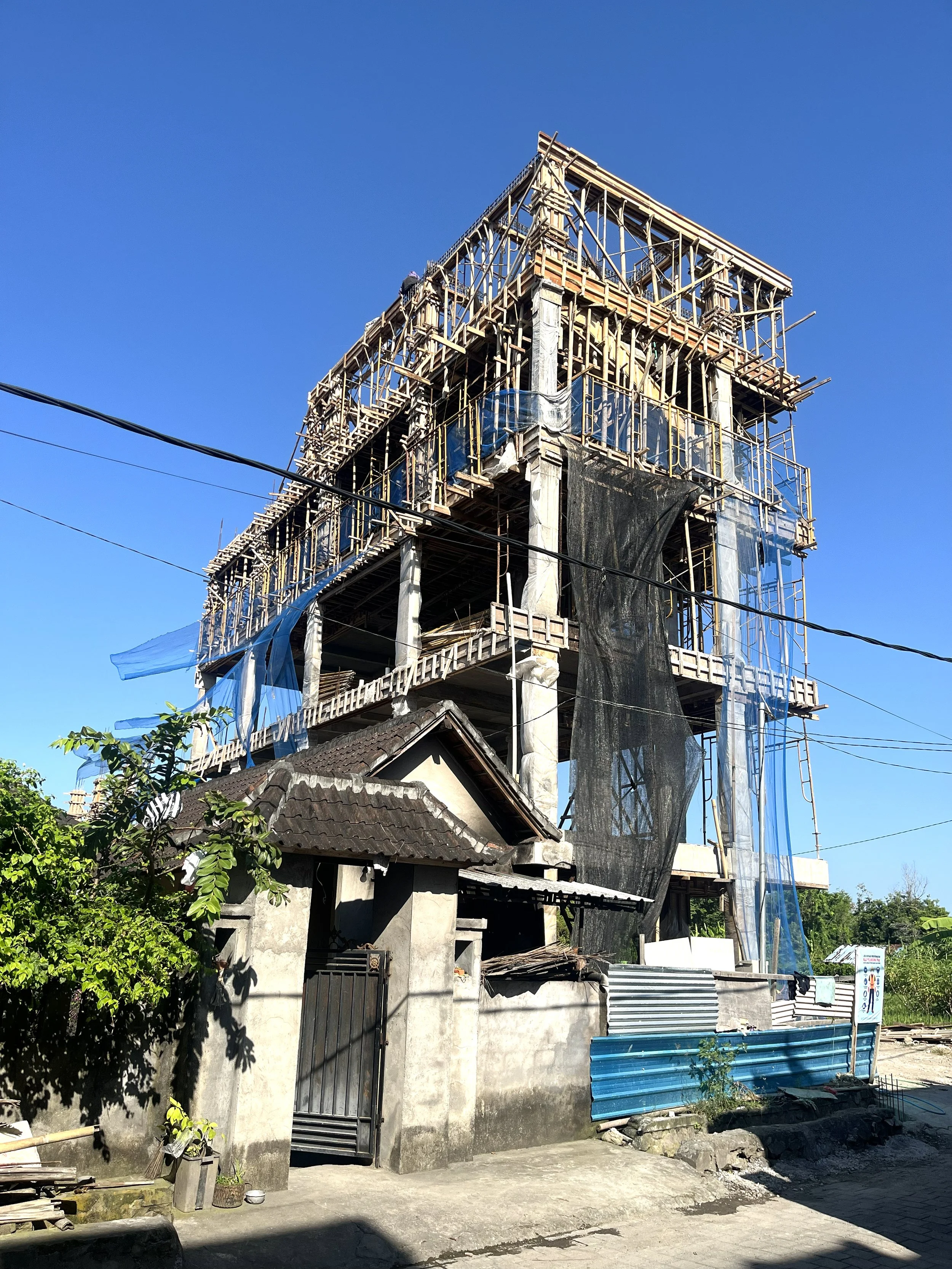
There’s also the massive and controversial Badung Regency Government Uluwatu seawall project to address what it said were cracking cliffs beneath the Pura Lahur Temple.
And there’s the development of a wedding chapel at Suluban Beach, right above the sacred Uluwatu cave itself – a gaping chasm holding an invisible heart that seems to drive this place.
On any given day there are about 40 tourists milling about inside that cave taking photos of each other, then another, doing their hair and telling each other to get a better angle.
I remember one day accidentally bumping a woman with my surfboard and apologised for ruining a photo I thought she was taking of the sunset.
“No, it’s okay,” she said, holding her phone aloft. “I was just checking how I looked.”
There’s little love for some of these larger projects among locals, and plenty of environmental concerns.
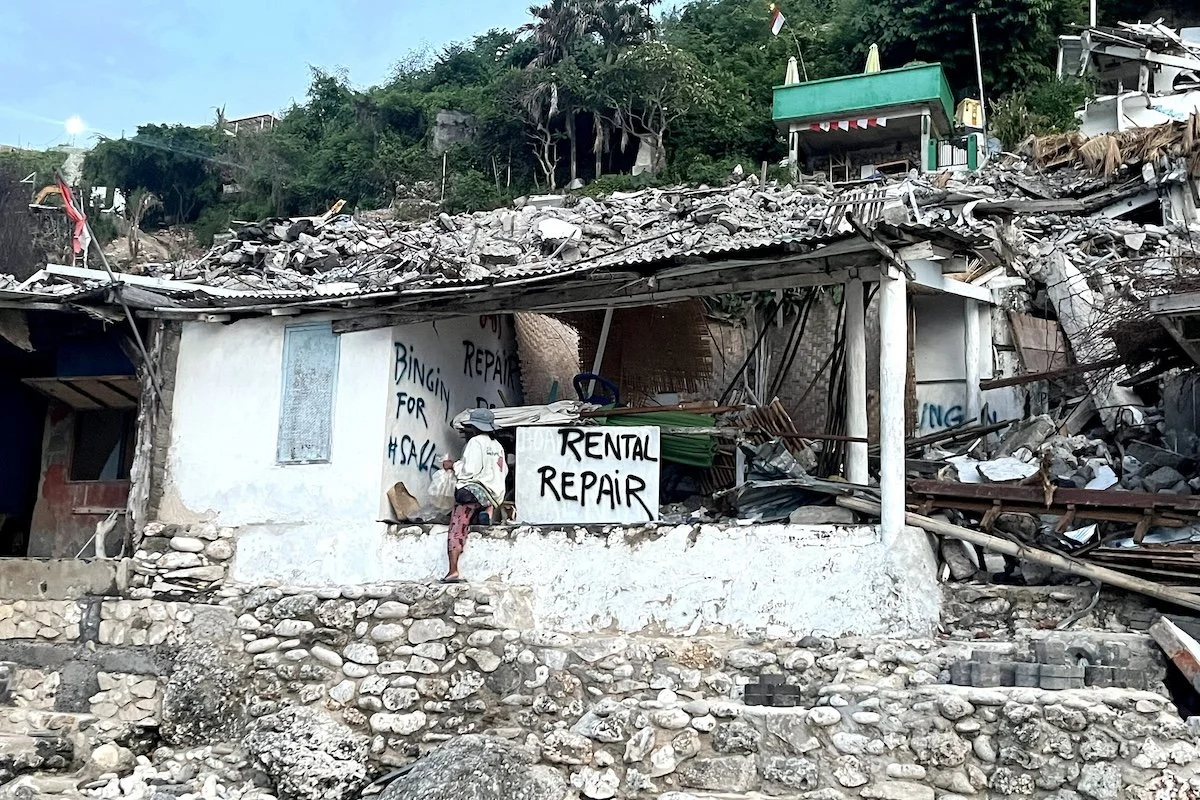
Yet in July 2025, Governor I Wayan Koster surprised everyone by targeting for demolition about 40 businesses and buildings he’d assessed to be constructed illegally at Bingin Beach without the necessary permits and approvals.
Some of them started as rickety family restaurants (warungs) in the 1980s, like much of the locally-owned infrastructure in the district, but according to some it was the growing size of foreign-owned projects in their midst that attracted the Governor’s eye.
The place remains a demolition zone covered in jackhammered concrete and twisted wire sinews, yet some Balinese have adapted, selling coconuts, water and surf lessons from the shade of ruins.
The Governor has since announced a cultural park will be built on the land for public use.
He’s also ordered the demolition of a Chinese-backed, 182-metre glass elevator under construction at Kelingking Beach, Nusa Penida, saying it violated planning regulations, a high-profile move that let every developer know they’re on notice.
Back at the restaurant, the Balinese woman delivers my order and gives me one of the beautiful smiles they’re famous for. After all, foreigners can’t own land here, they can only lease it, and when the tide inevitably turns and the trends go elsewhere, perhaps she knows those jackhammers will come out to rip it all up once more.
In the meantime, she’s grateful to have a job in a beautiful place, and I’m just another bule who’ll eventually go home.