The Action Is the Juice… Celebrating 30 Years of ‘HEAT’
Warner Brothers
As Heat turns 30, we revisit Michael Mann’s electrifying classic that redefined the crime thriller and gave us Pacino vs. De Niro at their peak.
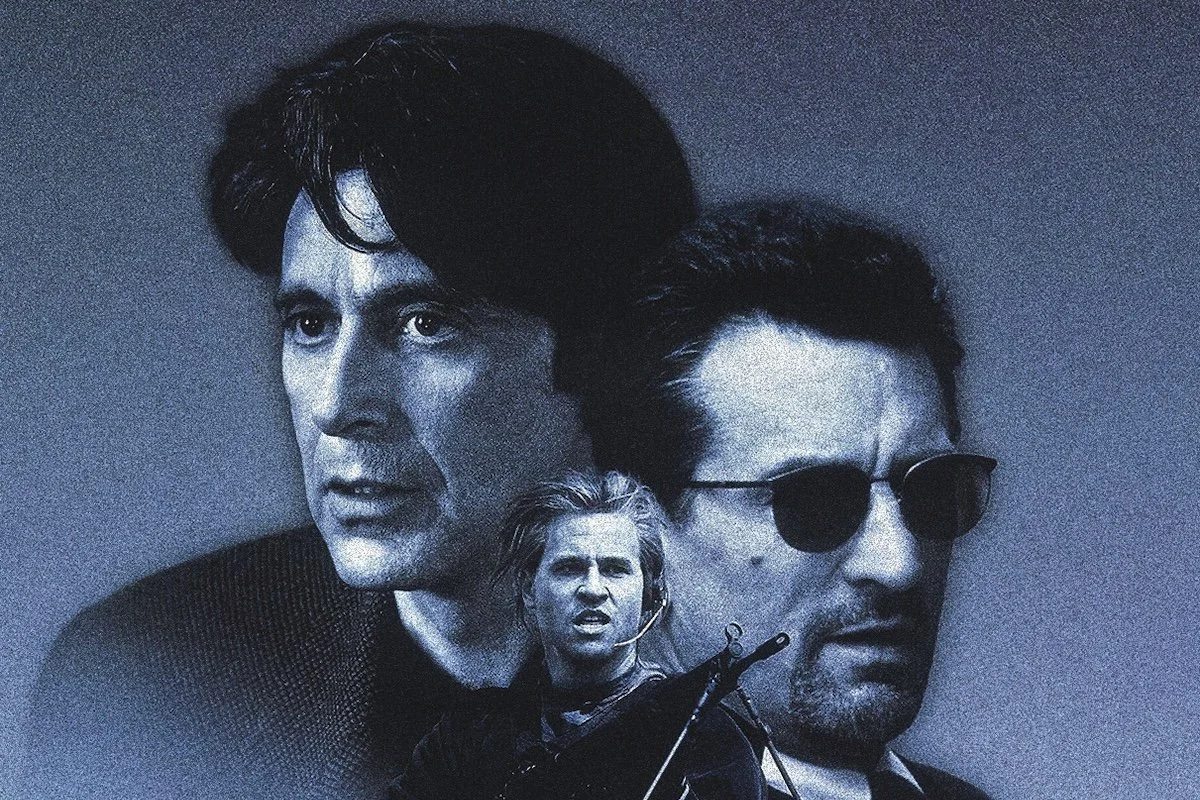
Michael Mann’s Heat remains the definitive crime saga – a sprawling Los Angeles heist epic where Al Pacino and Robert De Niro face off in the ultimate movie showdown. Mann’s magnum opus is more than just a gripping cat-and-mouse thriller; it’s a meditative exploration of broken men searching for meaning amongst the violence and chaos of Los Angeles, with Mann’s immersive visual style of filming on full display throughout the film’s 171-minute runtime.
Heat is arguably the greatest heist movie ever committed to celluloid, but it’s more than your standard cops and robbers flick. This is a film about tortured men and the choices they make and the intertwined relationship between LAPD Police Lieutenant Vincent Hanna (Pacino) and career criminal Neil McCauley (De Niro), two men on differing paths who find a common bond in their solitary pursuits – Hanna’s obsession with his job at the expense of his personal life and McCauley’s single-minded outlook that stops him from ever truly forming connections with others. Heat’s power lies in its portrayal of men defined not by success, but by the cost of their purpose.
But things could have been quite different if Mann’s original vision had come to fruition in 1989. Dominating the small screen with his successful creations Miami Vice and Crime Story, Mann was circling a James Dean biopic when he opted to write a heist movie based on stories he’d been told by Chicago ex-police officer Chuck Adamson. The two had collaborated on several projects over the years, with Mann intrigued by Adamson’s pursuit of real-life thief, Neil McCauley. He was particularly enraptured by a story about the two running into each other on the street and going for a cup of coffee, something he would famously incorporate in Heat.
After writing the script, Mann realised it would make a better television show, so he edited the screenplay for a 90-minute pilot. Shot in just 19 days, L.A. Takedown is Heat on a budget. The film received mixed reviews, with NBC opting not to buy the series after Mann refused to recast the main actors. Destined for life as a cable rerun, Mann had a soft spot for the film that would lead him to remake it as Heat in 1995.
A bigger, broader, more compelling take on L.A. Takedown, Heat became one of the most anticipated films of the year when it was announced that legendary actors Pacino and De Niro would be headlining this ensemble project. The rest of the cast was filled out by established stars such as Val Kilmer, Ashley Judd and Jon Voight alongside character actors most people recognise but can’t name, including Tom Sizemore, Ted Levine, William Fichtner, Danny Trejo and Tom Noonan.
The city of Los Angeles also acted as a secondary character, with Mann shooting almost the entire film on location, something unheard of these days. The director tasked his trusty location manager, Janice Polley, alongside Lori Balton, to scout places that had not appeared in films before. Mann wanted lesser-known locations and industrial areas of LA to reflect the loneliness and isolation of the main characters, while the extensive highways and bland office buildings provided the ideal foundation for the gritty crime flick. Mann intended to bring the audience into the film so they felt like a bystander and not a viewer.
He also expanded the original storyline to include several subplots, including Chris Shiherlis’ gambling addiction, Hanna’s troubled stepdaughter and Roger Van Zant’s double-cross attempt, but Heat is forever immortalised for two main sequences – the first on-screen meeting of Pacino and De Niro and the climactic shoot-out in downtown LA.
Despite the two coming up together as actors in New York City during the ‘60s, Pacino and De Niro had never shared a scene. While both appeared in The Godfather II, they never crossed paths on screen, so it was a big deal when they sat across from each other at the now-closed Kate Mantilini restaurant in Beverly Hills. Filmed at around 1am without any rehearsals, Mann used three cameras, two over the shoulder and one in profile (although it was never used), to shoot the six-minute tour de force from two of cinema’s GOATs.
In the scene, Pacino’s Hanna and De Niro’s McCauley feel each other out, opening up to each other about their differing life paths, only to end up realising they have more in common than they would like to admit. After trading barbs about each other’s professions – “Do you see me doing thrill-seeker liquor store hold-ups with a ‘Born To Lose’ tattoo on my chest?” McCauley replies in response to Hanna, suggesting he wants to go back to prison.” – Hanna discusses his shambolic personal life: “My life’s a disaster zone… I got a wife. We’re passing each other on the downslope of a marriage, my third, because I spend all my time chasing guys like you around the block,” prompting McCauley to reveal he has a “woman”, Eddy, whom he plans on running away with after one last job.
There’s a level of respect between the men as they dissect each other’s dreams. In Hanna’s, he’s sitting at a banquet table with all the dead victims of the murders he’s investigated, while McCauley finds himself drowning. He believes this is a sign that he’s running out of time, which turns out to be prophetic.
Every gesture, every mannerism, every line of dialogue hits, with both actors in fine form. There might not be a lot going on scene-wise, but it’s what’s underneath. McCauley tells Hanna his creed: “Don’t let yourself get attached to anything you are not willing to walk out on in 30 seconds flat if you feel the heat around the corner.” But of course, he does the exact opposite. Not only has he let Eady into his life, but he’s revealing all of this to the man who is trying to take him down.
The scene ends with the two admitting that, despite having met face to face, they will put each other down if it comes to it, before McCauley remarks, “Or maybe we’ll never see each other again,” with both giving a wry smile, understanding it’s more likely only one of them will survive their next run-in.
Then there are the bank robbery and shootout – a thrilling 12-minute action sequence that begins with McCauley and his crew entering the bank and ends with Sizemore’s Michael Cheritto dead on the footpath. Even watching today, the shootout will have you on the edge of your seat and is about as realistic as it gets.
The actors involved were put through an intensive three-month firearms training course before filming began, which is why it’s so realistic. When McCauley and his crew realise they are surrounded by cops, they open fire, adopting defensive positions as taught by former British Special Air Service sergeant Andy McNab, now best known as the author of a series of thriller novels. While blanks were used by the actors, Mann had real-life gunfire blasted out on set to give the scene more realism.
During a recent trip to South Korea for the Busan International Film Festival, Mann was interviewed about Heat and discussed the training the actors undertook. “We used live ammunition in all the training,” Mann explained. “When Val Kilmer does a magazine change, that footage is used to train Delta Force at Fort Bragg because he’s so fast and so good.”
There’s no music during the actual shootout either, with automatic weapon fire the only noticeable sound, with each clip dispersed from McCauley and Shiherlis’ Colt Model 654/733 carbine rifles like a mini explosion in your ears. Mann’s quick-cut editing adds another element of chaos to the scene, placing you right in the heat of the action. More than just a heist movie, Heat is a meditation on ambition, discipline, and the danger of living only for the chase. The film’s legacy continues to burn bright, with Mann set to return for Heat 2, an epic continuation that serves as both prequel and sequel, exploring the origins and aftermath of the 1995 classic. Just like its predecessor, it reminds us that for some, the action will always be the juice.