South Australian Icons: Jason Gillespie
Supplied
Each issue of Monty, we highlight a South Australian icon who deserves to be recognised for their achievements.
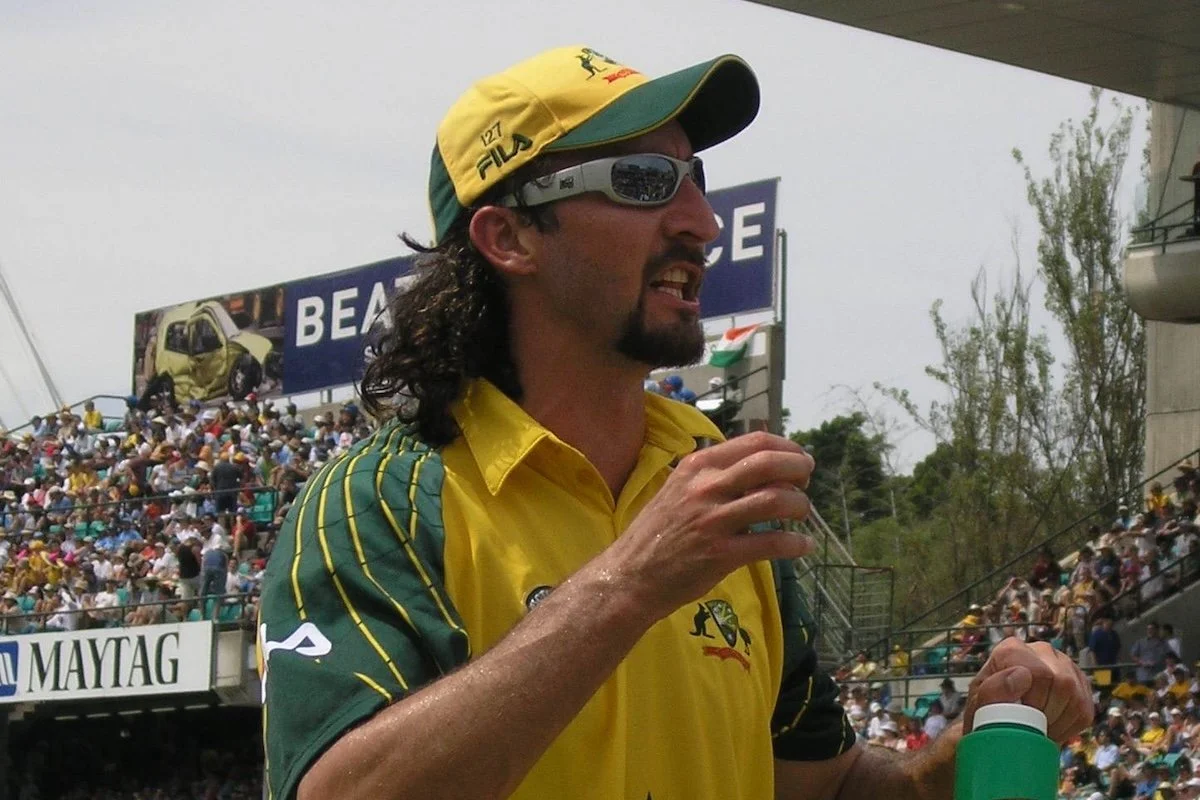
Running in full tilt, mullet bouncing in the air, Jason Gillespie was an uncompromising cricketer who left it all on the field. He might not have been born in SA, but the man affectionately known as “Dizzy” is as South Aussie as a pie floater with a cold Coopers Pale Ale. Spending his formative years in the City of Churches, it’s here that the seamer transformed from a lanky right-armer into one of the country’s premier strike bowlers, forming a formidable frontline attack alongside arguably Australia’s greatest ever pace bowler, Glenn McGrath.
Debuting in 1996, Gillespie’s career was riddled with setbacks. Lengthy periods on the sidelines due to an assortment of injuries, including stress fractures to his back, hamstrings, side strains, various ankle and hip problems and a particularly nasty collision with Steve Waugh during the 1999 tour of Sri Lanka that resulted in Gillespie suffering both a broken nose and leg, meant he played only 52 of a possible 92 tests after his first season in the green and gold.
But when he was on the pitch, Gillespie was a true workhorse of the Australian cricketing lineup. After recovering from the leg break, he made his way back into the Australian side and continued his distinguished test career for a further six years before playing his final match against Bangladesh in 2006. While he never dominated a test series like his contemporaries (the most wickets he took in a series was 20), Dizzy provided assured support for McGrath and spinner Shane Warne, going on to take an impressive 259 wickets in 71 test matches at an average of 26.13.
Gillespie is Australia’s sixth-highest wicket-taker and was the man the captain turned to when a long spell was needed to hold up one end while the more celebrated bowlers did their thing. Elusively quick, Gillespie didn’t have the line and length of McGrath, but made up for that with his ability to swing the ball, especially in England with the Duke’s ball. Cricket fans will forever remember his man-of-the-match performance at Headingly during the 1997 Ashes.
Dizzy took career-best figures of 7/37 in just 13.4 overs, decimating the English top order. Gillespie was also handy with the bat and prided himself on his stroke play with the willow. His first 50 came about against New Zealand at the GABBA in 2004, with Dizzy celebrating by riding his bat, reminiscent of Adam Sandler in the movie Happy Gilmore. His greatest feat with the bat came in his final test against Bangladesh at Chittagong, where he not only made his maiden first-class century, but ended up 201 not out. He faced 425 balls and was in the field for a mammoth 574 minutes. It was an insane moment in a career of highlights that had the rest of the Australian team laughing and cheering him on from the balcony.
In an article Gillespie wrote for The Roar in 2014, he elaborated on the feeling of scoring his only double ton and the cheeky advice he gave his emerging teammate at the end of the innings: “Michael Clarke was not out at the other end and was very happy for me. As we walked off (we declared), I decided to give the young Pup a piece of advice after our embrace. ‘Son, that’s how you score a Test double ton.’”
It remains the highest score by a nightwatchman and what Dizzy is best remembered for on field, despite his prowess as a fast bowler. With his Australian career coming to an end in 2006, Dizzy spent several seasons in the UK playing for Yorkshire and Glamorgan. He also had a stint playing for his hometown team the Redbacks, before calling it a day and entering the coaching merry-go-round. He transformed Yorkshire into a title-winning team in five seasons, winning back-to-back championships in 2014 and 2015. Although his stints coaching South Australia and Pakistan were less successful – he resigned from his role with Pakistan less than 12 months later due to a lack of communication between him and the board – he remains highly respected in the world of coaching.
Along with being one of South Australia’s greatest sporting icons, Gillespie is a descendant of the Kamilaroi people and the first Indigenous male to wear the baggy green. Proud to be recognised for this achievement, he is more concerned with reaching young Indigenous children and getting them into sport. “I think the key is continually looking to provide opportunities for kids to be able to play,” Gillespie said in an interview with the Daily Telegraph in 2023. “And I think that’s the key for what we want as a sport in general, we just want more people playing, more kids playing and certainly more Indigenous kids just falling in love with the game and seeing it as a viable option. That’s what we want, isn’t it? We want Indigenous kids to see cricket as a viable option.”
Eight months removed from his disastrous flirtation with the Pakistan cricket team, Gillespie is reportedly unsure if he will re-enter the coaching ranks, with media opportunities beckoning. Whether he decides to get back in the nets, jump behind the microphone or cheer from the sidelines, Dizzy’s story will continue to inspire a new generation of cricketers. For South Australians and cricket lovers the world over, Jason Gillespie is more than just a cult hero – he’s an Aussie icon.